Saturday, 4 July 2026

Wolfenstein 3D (Atari Jaguar review)

Developer: id Software
Publisher: Atari Corporation
Released: 1994

Wolfenstein 3D is a first-person shooter that was originally released on MS-DOS in 1992.

+ Level design has intricate layouts (with plenty of opportunities for flanking), and there's four save slots available.

+ Replayability is sky high due to the amount of hidden treasure and secrets that the game scores you on after each level.

+ Good range of weaponry (with the Rocket Launcher able to pierce several foes at once) and there's generous auto-aim.

+ Music intensifies the atmosphere in a similar way to Castlevania (1986, NES) and the huge bosses are terrifying to battle.

- Gameplay can become quite repetitive, especially as the stealth elements from the MS-DOS version are absent.

- Missing lots of stages compared to the MS-DOS original, and some enemies have jittery diagonal animations.

- Controls have too much travel on the h-axis, and the game gets confused between actions and strafing when near doors.


Saturday, 11 May 2024

Val D'Isere Skiing and Snowboarding (Atari Jaguar review)

Developer: Virtual Studio
Publisher: Atari Corporation
Released: 1994

Val D'Isere Skiing and Snowboarding is a winter sports game and a conversion of Val d'Isère Championship (1994, SNES).

+ Includes three race types, but the checkpoint-based (and fairly extensive) Free Run mode is the star of the show.

+ Action has a good sense of speed and once courses are memorised there's a certain rhythmic quality to the gameplay.

- Infuriatingly tough to stay on track due to minimal arrow signage / barriers and the rolling hills that obscure your vision.

- Camera is positioned too low to the ground, and you can't always see upcoming flags as you're reaching a hill peak.

- No option to battle simultaneously against CPU opponents, so the entirety of the action is a rather isolating experience.

- Game has no personality, and even your fellow opponents are represented by text names instead of avatars.

- Looks and sounds like a 16-bit SNES title, and there's little that takes advantage of the Jaguar's 64-bit power.


Friday, 10 May 2024

Bubsy in: Fractured Furry Tales (Atari Jaguar review)

Developer: Imagitec Design
Publisher: Atari Corporation
Released: 1994

Bubsy in: Fractured Furry Tales is a platformer that's exclusive to the Atari Jaguar.

+ Levels are huge with many twists and turns, and there's a password option to continue your progress at a later date.

- However, there's no map or clear direction from the stage design, resulting in aimless wandering and backtracking.

- Controls are atrociously unresponsive, and Bubsy constantly feels like he has a weight pulling him backwards.

- Dreadful collision detection (e.g. you'll often fall through platforms) and enemy placement is rage inducing.

- Gameplay seems like it wants to mimic the speed of Sonic (1991, Sega Genesis), but there's too many instant death traps.

- Camera never shows you the best view of the action and you often need to be at the edge of the screen for it to scroll.

- World 1 music sounds out-of-place and evokes a far too serious and downbeat tone for a whimsical platformer.


Saturday, 3 December 2022

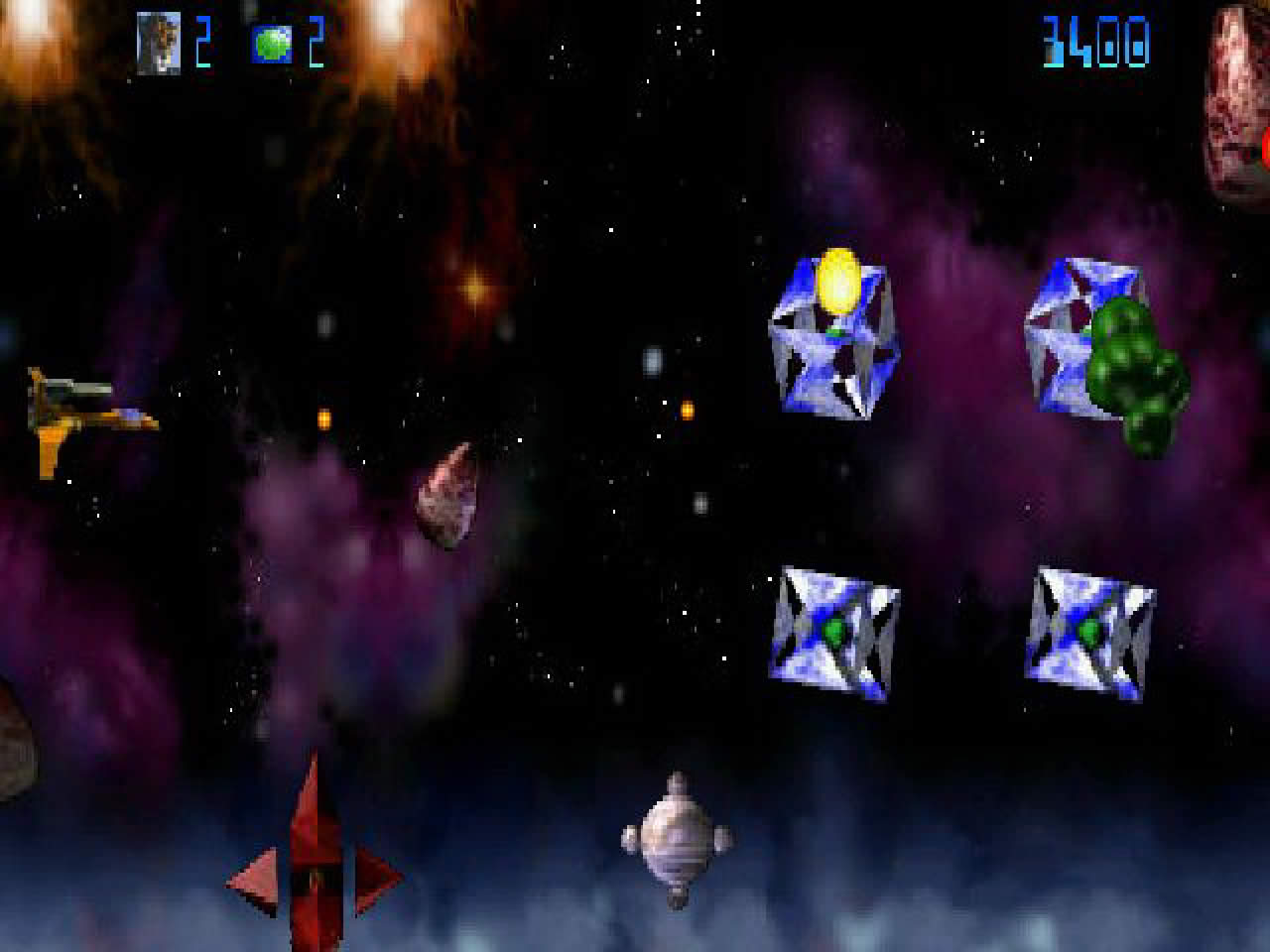
Trevor McFur in the Crescent Galaxy (Atari Jaguar review)

Developer: Atari Corporation, Flare II
Publisher: Atari Corporation
Released: 1993

Trevor McFur in the Crescent Galaxy is a shoot-em-up that was also a launch title for the console.

+ Rarely will you feel completely under-powered, as there's ample opportunities to obtain items after losing a life. 

+ Secondary items are diverse and offer many cool power-ups (such as a temporary helper ship) to assist you.

+ The ability to choose your starting point from the first four stages is a nice way to hone your skills.

- Deeply uninspired gameplay where the stages overstay their welcome and enemy patterns are repetitive.

- Level design is poor with no set-pieces and mostly flat backgrounds as the only differentiator for the locales.

- Enemy design is surreal (and often out-of-place), and comes across as random rather evoking any sense of fear.

- Sound effects are incredibly wimpy and the lack of in-stage music makes the action feel rather lifeless.


Sunday, 1 November 2020

Atari Karts (Atari Jaguar review)

Developer: Miracle Designs
Publisher: Atari Corporation
Released: 1995

Atari Karts is a kart racer that's exclusive to the Jaguar console.

There's 11 characters, three Cups and ten themed worlds that feature multiple track layouts. Bonuses (such as bursts of speed) and Hazards (including reversed controls) are embedded into the tracks and come into play if you drive over the associated icon. When critiquing the game, it's hard not to compare it against its obvious source of inspiration in Super Mario Kart (1992, SNES). On this basis, Atari Karts fails in a number of areas, notably in its presentation which feels lifeless and unappealing; the characters have zero personality and even the trophy celebration lacks the pomp and pageantry of Nintendo's 16-bit classic by only featuring a boring static screen. Most of the tracks are dull with little in the way of scenic interest or cool features. The worst part are the Castle themed tracks where it's ridiculously easy to find yourself stuck on a barrier thanks to the utterly moronic idea to have parts of the wall stick out into the race area. The controls generally work fine, but a noteworthy issue is that the ability to turn your kart sharply left or right is mapped to buttons 4 & 6 on the keypad; the need to take your thumbs off the d-pad and main buttons makes for some awkward placement and is only remedied if you have the rare Pro Controller where sharp turns are mapped to the shoulder buttons. And then there's the items (e.g. called Bonuses and Hazards here) which are very uninspired and it's sometimes hard to see which one you're about to collect as you drive over it. I also really don't like that certain items are automatically activated when obtained, as this takes away a strategic element.

Atari Karts borrows all the necessary foundations from the Mario Kart series, but forgets one vital component... fun! It also does nothing to set itself apart from Nintendo's franchise, or to advance the genre, and when coupled with sub-standard track and item design you're left with a rather bland kart racer.


Random trivia: Miracle Designs did start work on a sequel, but it never made it past the planning stage.

Sunday, 2 August 2020

Breakout 2000 (Atari Jaguar review)

Developer: MP Games
Publisher: Telegames
Released: 1996

Breakout 2000 is an action game that's a remake of the Arcade title Breakout (1976).


It consists of two modes with the newly updated version being Breakout 2000; here, the objective is to complete ten phases (each housing five playfields) by continually bouncing a ball off your paddle to smash walls made of bricks. Power-ups are available that add extra abilities to either your ball or paddle. While paddle controllers are the best way to experience these type of games, the Jaguar controller does an admirable job and its smooth left-to-right movements allow you to ricochet the ball with consistent precision. The introduction of power-ups is terrific as they add a risk-reward element in terms of you needing to keep an eye on the ball while rushing to grab a descending item. Another great mechanic is how power-ups remain in your arsenal for each playfield within a phase; if you manage to gain the Super Ball your life becomes a lot easier considering it can plough through multiple bricks at once! It is somewhat disappointing though that the gameplay doesn't feature more innovation, as almost everything here had already been seen in Arkanoid (1986, Arcade). Breakout Classic mode replicates the 1976 original and the objective is to clear two walls; options include having the ball smash against bricks, or careen straight through them for maximum damage. This mode falls short, as even on Expert mode it's a breeze to clear the screen due to the slow moving ball that doesn't increase in speed as it hits higher rows of bricks. Couple this with the fact that your vast paddle barely shrinks when the ball touches the top of the screen and you're left with a sadly inaccurate version of the Arcade game.

Breakout 2000 is a welcome upgrade to the 1976 original and it successfully manages to update the established gameplay to include power-ups and ever-changing stage layouts. It's unfortunate then that it doesn't do much to advance the genre, as most of its new ideas are heavily inspired by similar games from a decade earlier.


Random trivia: According to the game's developer Mario Perdue, rotary support was planned before being scrapped.

Saturday, 1 August 2020

Rayman (Atari Jaguar review)

Developer: Ubisoft Montpellier
Publisher: Ubisoft
Released: 1995

Rayman is a platformer that was also released on the Sega Saturn and Sony PlayStation in 1995.

There's six worlds and your mission is to restore harmony to the world by recapturing the Great Protoon from an unknown kidnapper and free the Electoons that usually gravitate around it. Rayman can attack using his fist punch, and other abilities can be unlocked such as a helicopter spin that allows you to temporarily float in mid-air. While there's nothing particularly outstanding about the stage layouts or hazard placements, there are some gorgeous scenic backdrops and quirky ideas, such as an entire stage that revolves around dodging bouncing pencils! There's even some cool auto-scrolling sections to mix things up and the awesome bosses feature multi-part battles that test your problem solving skills in fun and entertaining ways. One of the game's best features is unlocking abilities during your adventure; these slowly add new mechanics that switch up the gameplay and keep things feeling fresh. They also help when backtracking through beaten levels; while some might see this as a way to artificially lengthen total play time, it's gratifying to access previously inaccessible areas and see the level design open up in new and exciting ways. Where the action falters is in its severe trial-and-error, and you'll frequently find yourself facing a hazardous situation with no prior learning as to how to progress; losing several lives before you figure out a solution is often the only approach, and compounding the issue are the sparse checkpoints that force you to repeat minutes of gameplay in the event of death. Also, the music doesn't match the environments, especially the gentle piano that plays in the final world.

Rayman doesn't stray far from the gameplay formulas established in 16-bit platformers, but its cool power-up progression and gorgeous art style get the series off to a great start. It's a solid and varied adventure from start-to-finish, and as long as you're prepared for a serious (occasionally maddening!) challenge there's plenty of fun to be had. 


Random trivia: A mini-game which resembles Atari's Breakout (1976, Arcade) can be unlocked by pressing 1364 during Rayman's introductory animation.

Find a Review