Saturday, 11 May 2024

Val D'Isere Skiing and Snowboarding (Atari Jaguar review)

Developer: Virtual Studio
Publisher: Atari Corporation
Released: 1994

Val D'Isere Skiing and Snowboarding is a winter sports game and a conversion of Val d'Isère Championship (1994, SNES).

+ Includes three race types, but the checkpoint-based (and fairly extensive) Free Run mode is the star of the show.

+ Action has a good sense of speed and once courses are memorised there's a certain rhythmic quality to the gameplay.

- Infuriatingly tough to stay on track due to minimal arrow signage / barriers and the rolling hills that obscure your vision.

- Camera is positioned too low to the ground, and you can't always see upcoming flags as you're reaching a hill peak.

- No option to battle simultaneously against CPU opponents, so the entirety of the action is a rather isolating experience.

- Game has no personality, and even your fellow opponents are represented by text names instead of avatars.

- Looks and sounds like a 16-bit SNES title, and there's little that takes advantage of the Jaguar's 64-bit power.


Friday, 10 May 2024

Bubsy in: Fractured Furry Tales (Atari Jaguar review)

Developer: Imagitec Design
Publisher: Atari Corporation
Released: 1994

Bubsy in: Fractured Furry Tales is a platformer that's exclusive to the Atari Jaguar.

+ Levels are huge with many twists and turns, and there's a password option to continue your progress at a later date.

- However, there's no map or clear direction from the stage design, resulting in aimless wandering and backtracking.

- Controls are atrociously unresponsive, and Bubsy constantly feels like he has a weight pulling him backwards.

- Dreadful collision detection (e.g. you'll often fall through platforms) and enemy placement is rage inducing.

- Gameplay seems like it wants to mimic the speed of Sonic (1991, Sega Genesis), but there's too many instant death traps.

- Camera never shows you the best view of the action and you often need to be at the edge of the screen for it to scroll.

- World 1 music sounds out-of-place and evokes a far too serious and downbeat tone for a whimsical platformer.


Saturday, 3 December 2022

Trevor McFur in the Crescent Galaxy (Atari Jaguar review)

Developer: Atari Corporation, Flare II
Publisher: Atari Corporation
Released: 1993

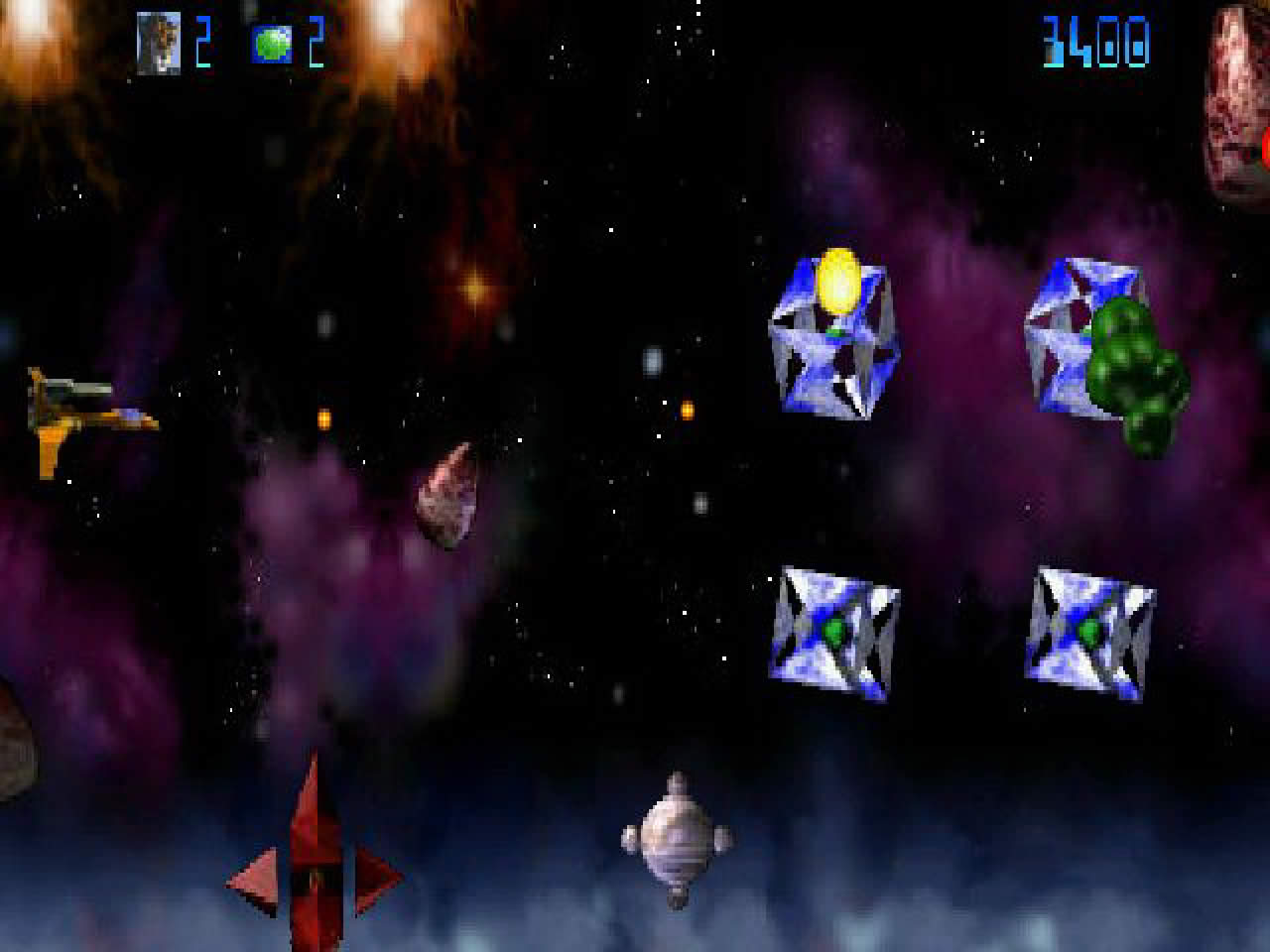
Trevor McFur in the Crescent Galaxy is a shoot-em-up that was also a launch title for the console.

+ Rarely will you feel completely under-powered, as there's ample opportunities to obtain items after losing a life. 

+ Secondary items are diverse and offer many cool power-ups (such as a temporary helper ship) to assist you.

+ The ability to choose your starting point from the first four stages is a nice way to hone your skills.

- Deeply uninspired gameplay where the stages overstay their welcome and enemy patterns are repetitive.

- Level design is poor with no set-pieces and mostly flat backgrounds as the only differentiator for the locales.

- Enemy design is surreal (and often out-of-place), and comes across as random rather evoking any sense of fear.

- Sound effects are incredibly wimpy and the lack of in-stage music makes the action feel rather lifeless.


Sunday, 1 November 2020

Atari Karts (Atari Jaguar review)

Developer: Miracle Designs
Publisher: Atari Corporation
Released: 1995

Atari Karts is a kart racer that's exclusive to the Jaguar console.

There's 11 characters, three Cups and ten themed worlds that feature multiple track layouts. Bonuses (such as bursts of speed) and Hazards (including reversed controls) are embedded into the tracks and come into play if you drive over the associated icon. When critiquing the game, it's hard not to compare it against its obvious source of inspiration in Super Mario Kart (1992, SNES). On this basis, Atari Karts fails in a number of areas, notably in its presentation which feels lifeless and unappealing; the characters have zero personality and even the trophy celebration lacks the pomp and pageantry of Nintendo's 16-bit classic by only featuring a boring static screen. Most of the tracks are dull with little in the way of scenic interest or cool features. The worst part are the Castle themed tracks where it's ridiculously easy to find yourself stuck on a barrier thanks to the utterly moronic idea to have parts of the wall stick out into the race area. The controls generally work fine, but a noteworthy issue is that the ability to turn your kart sharply left or right is mapped to buttons 4 & 6 on the keypad; the need to take your thumbs off the d-pad and main buttons makes for some awkward placement and is only remedied if you have the rare Pro Controller where sharp turns are mapped to the shoulder buttons. And then there's the items (e.g. called Bonuses and Hazards here) which are very uninspired and it's sometimes hard to see which one you're about to collect as you drive over it. I also really don't like that certain items are automatically activated when obtained, as this takes away a strategic element.

Atari Karts borrows all the necessary foundations from the Mario Kart series, but forgets one vital component... fun! It also does nothing to set itself apart from Nintendo's franchise, or to advance the genre, and when coupled with sub-standard track and item design you're left with a rather bland kart racer.


Random trivia: Miracle Designs did start work on a sequel, but it never made it past the planning stage.

Sunday, 2 August 2020

Breakout 2000 (Atari Jaguar review)

Developer: MP Games
Publisher: Telegames
Released: 1996

Breakout 2000 is an action game that's a remake of the Arcade title Breakout (1976).


It consists of two modes with the newly updated version being Breakout 2000; here, the objective is to complete ten phases (each housing five playfields) by continually bouncing a ball off your paddle to smash walls made of bricks. Power-ups are available that add extra abilities to either your ball or paddle. While paddle controllers are the best way to experience these type of games, the Jaguar controller does an admirable job and its smooth left-to-right movements allow you to ricochet the ball with consistent precision. The introduction of power-ups is terrific as they add a risk-reward element in terms of you needing to keep an eye on the ball while rushing to grab a descending item. Another great mechanic is how power-ups remain in your arsenal for each playfield within a phase; if you manage to gain the Super Ball your life becomes a lot easier considering it can plough through multiple bricks at once! It is somewhat disappointing though that the gameplay doesn't feature more innovation, as almost everything here had already been seen in Arkanoid (1986, Arcade). Breakout Classic mode replicates the 1976 original and the objective is to clear two walls; options include having the ball smash against bricks, or careen straight through them for maximum damage. This mode falls short, as even on Expert mode it's a breeze to clear the screen due to the slow moving ball that doesn't increase in speed as it hits higher rows of bricks. Couple this with the fact that your vast paddle barely shrinks when the ball touches the top of the screen and you're left with a sadly inaccurate version of the Arcade game.

Breakout 2000 is a welcome upgrade to the 1976 original and it successfully manages to update the established gameplay to include power-ups and ever-changing stage layouts. It's unfortunate then that it doesn't do much to advance the genre, as most of its new ideas are heavily inspired by similar games from a decade earlier.


Random trivia: According to the game's developer Mario Perdue, rotary support was planned before being scrapped.

Saturday, 1 August 2020

Rayman (Atari Jaguar review)

Developer: Ubisoft Montpellier
Publisher: Ubisoft
Released: 1995

Rayman is a platformer that was also released on the Sega Saturn and Sony PlayStation in 1995.

There's six worlds and your mission is to restore harmony to the world by recapturing the Great Protoon from an unknown kidnapper and free the Electoons that usually gravitate around it. Rayman can attack using his fist punch, and other abilities can be unlocked such as a helicopter spin that allows you to temporarily float in mid-air. While there's nothing particularly outstanding about the stage layouts or hazard placements, there are some gorgeous scenic backdrops and quirky ideas, such as an entire stage that revolves around dodging bouncing pencils! There's even some cool auto-scrolling sections to mix things up and the awesome bosses feature multi-part battles that test your problem solving skills in fun and entertaining ways. One of the game's best features is unlocking abilities during your adventure; these slowly add new mechanics that switch up the gameplay and keep things feeling fresh. They also help when backtracking through beaten levels; while some might see this as a way to artificially lengthen total play time, it's gratifying to access previously inaccessible areas and see the level design open up in new and exciting ways. Where the action falters is in its severe trial-and-error, and you'll frequently find yourself facing a hazardous situation with no prior learning as to how to progress; losing several lives before you figure out a solution is often the only approach, and compounding the issue are the sparse checkpoints that force you to repeat minutes of gameplay in the event of death. Also, the music doesn't match the environments, especially the gentle piano that plays in the final world.

Rayman doesn't stray far from the gameplay formulas established in 16-bit platformers, but its cool power-up progression and gorgeous art style get the series off to a great start. It's a solid and varied adventure from start-to-finish, and as long as you're prepared for a serious (occasionally maddening!) challenge there's plenty of fun to be had. 


Random trivia: A mini-game which resembles Atari's Breakout (1976, Arcade) can be unlocked by pressing 1364 during Rayman's introductory animation.

Saturday, 18 April 2020

Power Drive Rally (Atari Jaguar review)

Developer: Rage Software
Publisher: Time Warner Interactive
Released: 1995

Power Drive Rally is a racing game that's exclusive to the Atari Jaguar.


It includes a Season mode which houses various events including solo races (checkpoint based), rally cross (vs. a CPU opponent) and skills tests (obstacle courses against the clock). Each allows you to earn money in order to upgrade your vehicle, or to repair its state to improve performance (e.g. engine, tires, brakes). Season mode is lengthy and it's enjoyable working your way through, surviving to advance to another round and strategising on when to repair your car. The clarity of the voice samples from your navigator is fantastic and actually enhances your driving skills due to you not having to focus purely on on-screen arrows; they also allow you to judge and plan for upcoming turns much better and come in very handy when trying to shave off a few seconds from your closest rival. The action is lacking in personality though (e.g. there's no crowd noise or cut-scenes showing the racers) and it doesn't do anything to excite the player from a presentation standpoint. The courses do an adequate job of featuring multiple layouts per location, and although there's nothing here you haven't seen a million times before, I do like how items such as boosts are scattered throughout to add a risk-reward element. Also, the skills tests add some excellent gameplay variety and once you're familiar with what's required in each one (some trial-and-error is always involved due to the strict time limit) there's a lot of fun to be had in manoeuvring your vehicle in a more delicate manner to the main races. Another plus is that there are three save slots for multiple players to continue their progress at a later date.

Power Drive Rally is an unremarkable, yet solid racing game that plays well and has some nice vehicle upgrade options. It certainly doesn't reach the excitement and intensity of something like Neo Drift Out: New Technology (1996, Neo Geo CD), but it has plenty of content to satisfy if you're looking for a single-player only experience.


Random trivia: The first game in the series was Power Drive, which was released on various systems including the Commodore Amiga (1994) and Super Nintendo (1994).

Saturday, 29 February 2020

Supercross 3D (Atari Jaguar review)

Developer: Tiertex Design Studios
Publisher: Atari Corporation
Released: 1995

Supercross 3D is a motorcycle racing game that's exclusive to the Atari Jaguar.


The modes are Practice (solo session), Race (compete against seven other riders) and Tournament (circuit across all 14 tracks). Tricks can be executed with the C button and you can customise your bike by selecting the tires, shocks and gears to suit the surface of each track. The frame-rate is pretty much a slideshow and trying to control your bike is nigh-on impossible due to the oppressive over/under-steer you'll face depending on whether or not the game decides to register your inputs. This shockingly low FPS results in the action being entirely broken and you'll spend more time crashing your bike than you will riding it. The track edges don't offer any let-up either, as instead of decreasing your acceleration they'll knock you down immediately if you touch even the slightest part of them during a perilous corner manoeuvre. Simply put, the racing is extremely nerve-wracking for completely the wrong reasons! Bearing all of this in mind, it almost goes without saying that trying to land your bike at the correct angle for an ideal landing, or attempting to time perfect ramp launches is out of the question. To top things off, the trick system is pointless, and the track design is totally uninspired with each location looking and playing almost identically. You can at least save your Tournament progress, but trying to endure 14 races is a punishment that few are likely to withstand! I do like the track-side TV screen with its mirrored racing action, but that's the only compliment I can give to the graphics which are a blurry, muddy mess. The music also fails due to its short loops and awful, cliched rock riffs.

Supercross 3D is a complete and utter shambles and Atari Corporation should be embarrassed to have published a game that's clearly this unfinished. The list of problems is remarkable and when you factor in the atrocious frame-rate, godawful controls and superfluous trick system you have a real recipe for disaster.


Random trivia: The game even fails at the intro screen, as it lists the title as Supercross X!

Thursday, 20 February 2020

Club Drive (Atari Jaguar review)

Developer: Atari Corporation
Publisher: Atari Corporation
Released: 1994

Club Drive is a racing game that's exclusive to the Atari Jaguar.


It consists of four worlds and three modes. The first is Collect which supports 1-2 players and the aim is to drive into ten objects as they randomly appear. While it's a cool idea to generate objects over multiple floors to keep players guessing, the worlds themselves just aren't well designed; on top of being very small in size (meaning the game will often spawn a new object in the same area), they all lack distinguishing features. Race supports 1-2 players with the winner being the person who completes the necessary number of laps as fast as possible. The San Francisco level is fantastic with famous landmarks such as the Golden Gate Bridge on display, and it's clever how the finish line is the entrance to a pier! Unfortunately, it can only be played solo, as the multiplayer version takes place in a small car park. The rest of the tracks are mundane with Velocity Park being a poor imitation of Stunt Car Racer's (1989, Commodore Amiga) death-defying jumps. Tag is two-player only and the aim is to hit your opponent to 'tag' them, with the winner being the person who remains 'not it' the longest. The small arenas do this mode no justice and the fact that there's no room to hide means that you don't have many ways to strategically plan your movements. Throughout all modes, playing solo is bland due to the inability to compete against the CPU. The frame-rate is acceptable though and there are some neat touches, such as the game of Pong that appears on the big TV in the Jerome's Pad level. Also, the Rewind feature is outstanding and ahead of its time, as it allows bad decisions to be reversed immediately.

Club Drive is more playable than Checkered Flag (1994, Atari Jaguar) thanks to its passable frame-rate, but almost everything about it is extremely banal. While you may get 30 minutes of so-so enjoyment from its multiplayer offerings, those playing alone will quickly grow tired of its uninspired, shallow modes.


Random trivia: According to programmer Eric Smith, Club Drive was inspired by Indy 500 (1977, Atari 2600).

Wednesday, 19 February 2020

Cybermorph (Atari Jaguar review)

Developer: Attention to Detail
Publisher: Atari Corporation
Released: 1993

Cybermorph is a third-person shoot-em-up that was a pack-in title for the Atari Jaguar.


Your mission is to recover pods so that resistance fighters have the weapons, equipment and expertise to stop the Pernitia Empire. There's five sectors (with eight worlds each) and as you collect the required number of pods you can shoot enemies down with various weapons including a Twin-Shot and Cruise Bombs. The concept is straightforward which leads to some intuitive gameplay where even newcomers can jump right into the action. Coupling this is the solid control scheme, as while there are some frame-rate dips, everything is responsive. In fact, before long you'll be zipping around and then stopping on a dime to shoot incoming enemies like a pro! These enemies come with different abilities to mix things up and I especially like the Pod Carriers that try to move unattended pods until you blast them down! The range of weapons is great too (that you can switch between on the fly) and there's some variety from just collecting pods, such as needing to deactivate force fields. Another feature I like is that all eight worlds in each sector are immediately unlocked, meaning you can tackle them in any order; this minimises frustration and adds strategy. However, the draw distance is very low which does cause frustration when the radar stops showing the location of the nearest pod. For example, without this guidance you have no choice but to fly aimlessly with a limited field of view until you stumble upon the missing pod; even then, if you need to shoot enemies down first it can then be annoying to repeatedly circle the same area in an attempt to relocate the pod until it pops back into view.

Cybermorph has received much criticism over the years, but while it is a product of its time and there are some obvious technical limitations, the core mechanics are undoubtedly fun and provide hours of entertainment. There's lots of content to sink your teeth into and plenty of ways to tackle each of the sector's worlds.


Random trivia: The original 2MB cartridge was eventually replaced by a 1MB version that omitted an animated intro and various speech samples as a cost-cutting measure.

Sunday, 16 February 2020

Checkered Flag (Atari Jaguar review)

Developer: Rebellion Developments
Publisher: Atari Corporation
Released: 1994

Checkered Flag is a racing game that's exclusive to the Atari Jaguar.


It consists of three modes which are Single Race, Free Practice (time trial) and Tournament (race all ten tracks against five drones). Things get off to a great start with a comprehensive menu that allows you to select various options such as weather, tyre type, gears, CPU opponents and number of laps. There's also six camera angles to choose from which is impressive for the time. Unfortunately, that's where the positives end and the action is immediately hampered by a frame-rate that often dips into single-digit territory. Not only does this make it difficult to see upcoming turns with any level of precision, it also affects the controls as they'll frequently be ignored while the next frame is being loaded. A second later, the frame-rate will marginally improve and you'll then battle with severe over-steer while cornering, leading you straight into a wall. There's seemingly little rhyme or reason as to when this will happen, so you're completely at the mercy of the game's ability to render the action quickly enough. The only way to make the action slightly (and I do mean slightly) playable is to repeatedly tap the accelerator in order to avoid hitting top speed; this completely defeats the object of a high-octane racer, but it's almost impossible to approach it any other way. The ten tracks don't have any redeeming qualities either, as they're all incredibly simplistic and do nothing to match the charming aesthetics of Virtua Racing Deluxe (1994, Sega 32X). Finally, the pits do nothing (the manual literally states to avoid them!) and the drones have a weird tendency of stopping in the middle of the road for no apparent reason.

Checkered Flag is an unplayable mess that was clearly released in beta form with broken controls and an erratic frame-rate, making it impossible to race without wiping out every few seconds. To top it off, the tracks feel lifeless with no scenic personality and the AI has a poorly implemented, half-baked rubber banding system in place.


Random trivia: Rebellion Developments also worked on Alien vs Predator (1994, Atari Jaguar).

Friday, 11 December 2015

Tempest 2000 (Atari Jaguar review)

Developer: Atari Corporation, Llamasoft
Publisher: Atari Corporation
Released: 1994

Tempest 2000 is an updated version of the Arcade classic Tempest that was released in 1981.


You control a Blaster and the objective is to shoot down waves of enemies that approach from the far end of the play area. On top of your laser you can also use a Supercharger once per level which acts as a smart bomb. There's four modes with Traditional being similar to the original in that you blast through waves of enemies to build up a high score. Tempest 2000 mode adds power-ups such as a powerful Particle Laser and the ability to jump over incoming foes. In Tempest Plus you can play alone, with an A.I. Drone or share lives with a friend. Finally, Tempest Duel is a 2-player mode where you have access to a mirror to deflect your opponent's shots! Each is enjoyable and there's tons of replayability by learning their unique rules. Highlights are Tempest 2000 mode due to the items that spice up the gameplay, and Tempest Plus as the A.I. Droid you play with is pretty competent! The action is fast and furious and impressively there's no slowdown despite the carnage that occurs. There's tons of strategy involved too as some enemies move slow but split in two when shot, while others are quick but can be destroyed in one hit. Although the shooting mechanics are brilliant the main thing that keeps things interesting is the gigantic range of play areas; some are completely flat while others have large contours that obscure your view slightly; they're all great and constantly keep you on your toes. The graphics are amazing with cool particle effects and warp transition screens. Similarly, the music is outstanding and the up-tempo tracks sound CD quality...remarkable for a cartridge based game!

Tempest 2000 is a must-own title for the Atari Jaguar as you'll start playing and then suddenly realise that several hours have passed in the blink of an eye! The shooting action is fun and engrossing and despite its simple premise it's highly addictive with deceptively deep gameplay mechanics.


Random trivia: The game was ported to the PC, PlayStation and Sega Saturn in 1996.

Saturday, 20 June 2015

Doom (Atari Jaguar review)

Developer: id Software
Publisher: Atari
Released: 1994

Doom is a first-person shooter that was released on MS-DOS a year after id Software's ground-breaking Wolfenstein 3D.


This Jaguar port consists of 24 levels and the premise is usually to locate coloured keys to open locked doors and eventually reach the exit. Unlike some other versions (3DO, 32X, SNES) this one features a full screen mode meaning the play area isn't cropped. While the Jaguar controller isn't particularly comfortable it does have one advantage. Instead of having to slowly cycle through weapons using a single button you can use the numbered keys on the bottom of the controller; each has an assigned weapon and if you have the overlay you can quickly tap the one you require. This is great as it allows you to make split second decisions against some of the tougher enemies. Each level is expertly designed (not to mention creepy!) and the further you advance the maps get more maze-like. Like Wolfenstein 3D there are tons of secret areas to locate that house extra weapons, armor and health. There are also a few boss battles that take place in large arenas; they're a nice change of pace and due to the amount of bullets required to kill them you'll have to use strategy instead of firing at will. The range of weapons is excellent and includes rocket launchers, shotguns and a chainsaw. Although the game is perfectly playable, the frame-rate is choppy and as a result you'll sometimes have to wrestle with the controls to line up with an enemy or a switch. There's no music during the gameplay and it leaves the experience feeling rather lifeless. There are some tracks once you finish a level but they sound awful and worse than the 32X version!

The definitive version of Doom is probably on the PS1 (1995) but this port is still very respectable. It does have some minor issues with the frame-rate and lack of music but the gameplay is still just as gripping and the lengthy campaign will have you playing for a while.


Random trivia: The reason for the lack of in-game music is that the Jaguar's DSP chip had to be used for a number of things such as collision detection. Attempting to play tracks during gameplay would have interfered with these other functions.

Find a Review